

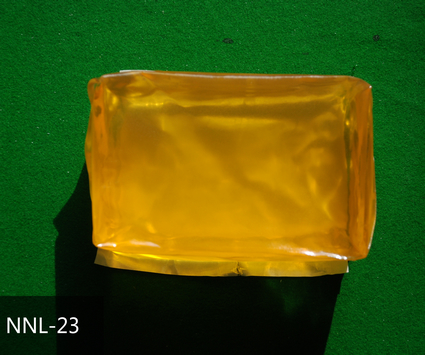
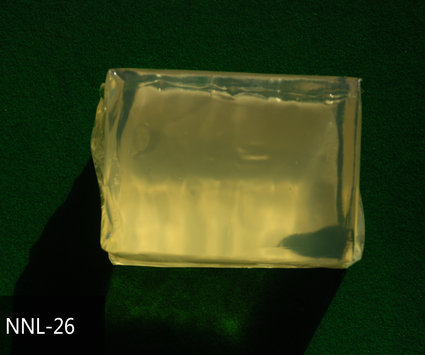
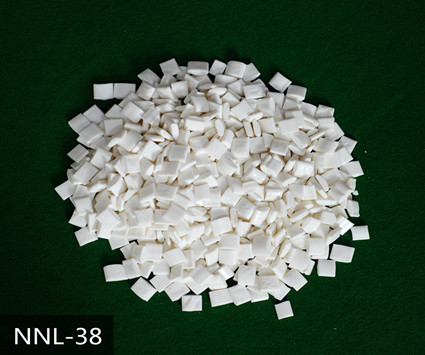
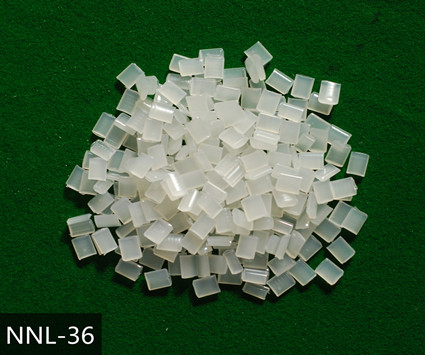
Hot melt adhesives (“HMAs”) are ubiquitous in many areas of commerce including consumer and industrial packaging where a bond is required between a substrate and a second item. HMAs are routinely used in the manufacture of corrugated cartons, boxes, cereal boxes and the like. They are also used in diverse areas, such as bookbinding; sealing the ends of paper bags; furniture manufacturing; manufacture of particleboard, linerboard, various other paper goods, and for adhering other articles, such as glass, metals and various plastics, including attaching paper labels to plastic containers. Additional uses of hot-melt adhesives include, for example only, lamination, product assembly, and non-woven construction applications.
Because of these diverse applications, hot melt adhesives may be required to maintain a strong bond over a wide range of temperature conditions. For example, in the manufacture of corrugated cartons used for shipping refrigerated or frozen foods, or foods packed in ice, hot melt adhesives are generally selected because of their ability to maintain a strong bond under low temperature conditions.
However in other applications the hot melt adhesive may have to maintain a strong bond to the substrate under extremes of stress and shock in handling, and high temperatures and humidity. Foods or beverages for example are often packaged by warm or hot filling. Moreover cases and cartons often encounter very high temperatures when trucked, so adhesives having sufficiently good heat resistance are required in these applications. “Sufficiently good heat resistance” is to be understood to mean that the cured adhesive does not immediately soften when acted upon by elevated temperature, with the result that the adhesive bond loosens and/or the bonded parts shift with respect to one another.
Because of these diverse applications, hot melt adhesives may be required to maintain a strong bond over a wide range of temperature conditions. For example, in the manufacture of corrugated cartons used for shipping refrigerated or frozen foods, or foods packed in ice, hot melt adhesives are generally selected because of their ability to maintain a strong bond under low temperature conditions.
However in other applications the hot melt adhesive may have to maintain a strong bond to the substrate under extremes of stress and shock in handling, and high temperatures and humidity. Foods or beverages for example are often packaged by warm or hot filling. Moreover cases and cartons often encounter very high temperatures when trucked, so adhesives having sufficiently good heat resistance are required in these applications. “Sufficiently good heat resistance” is to be understood to mean that the cured adhesive does not immediately soften when acted upon by elevated temperature, with the result that the adhesive bond loosens and/or the bonded parts shift with respect to one another.